
How to Remove a Tick From a Dog and Prevent Infection
To remove a tick from a dog, grasp the tick as close to the skin as possible with fine-tipped tweezers or a tick removal tool, then pull straight upward with slow, steady pressure. Prompt removal matters because the longer a tick stays attached, the greater the chance it passes along diseases like Lyme disease, anaplasmosis, or ehrlichiosis. Pennsylvania consistently reports some of the highest Lyme disease numbers in the country, and dogs in and around McKean, PA, pick up ticks on hikes, in tall grass, and even in their own backyards. Knowing how to remove a tick from a dog correctly helps you avoid leaving parts behind or squeezing more germs into the bite. At McKean Veterinary Hospital, our team removes ticks every season and helps families protect their pets with year-round prevention. Below, we break down how to remove a tick from a dog step by step, what to watch for afterward, and when to call your veterinarian.
Gather Your Materials Before You Start
Having everything within reach before you begin makes the process faster and less stressful for you and your dog.
Ticks don’t fall off on their own until they finish feeding, so there’s no benefit to waiting. Still, a few minutes of preparation prevents mistakes, such as grabbing the wrong tool or letting the tick slip away once it’s out. Here’s what to set out:
- Fine-tipped tweezers or a dedicated tick removal tool (household tweezers with blunt tips tend to crush the tick)
- Disposable gloves to avoid contact with the tick’s fluids
- A small jar or zip-top bag with rubbing alcohol for storing the tick
- Mild soap, warm water, and a clean cloth or paper towels
- Treats and a second person to help hold and reassure your dog
Methods to Skip
Online advice often suggests coating a tick in petroleum jelly or nail polish, holding a hot match to it, or dabbing it with essential oils. These methods don’t work reliably, and they can irritate the tick into releasing more saliva into the bite. Some can also burn or irritate your dog’s skin. Simple mechanical removal remains the approach recommended by veterinarians and public health agencies. When people ask our team how to remove a tick from a dog, the answer always starts with the right tweezers, not a home remedy.
How to Locate the Tick on Your Dog
Finding the tick is often the trickiest part, especially on dogs with thick or dark coats.
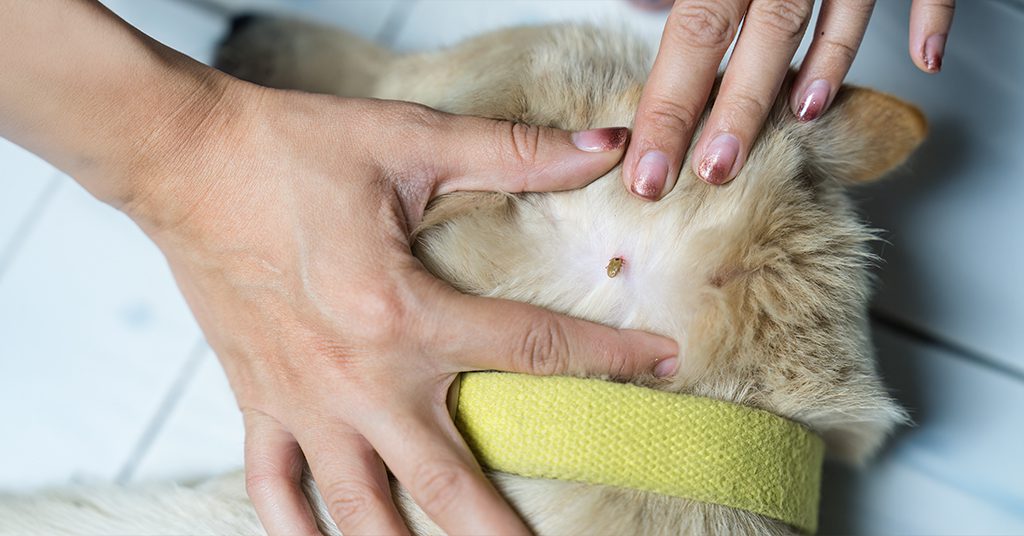
Run your fingers slowly over your dog’s entire body, pressing gently enough to feel the skin. An attached tick feels like a small, firm bump, roughly the size of a sesame seed when unfed and as large as a grape when engorged. Part the fur when you feel something unusual so you can get a clear look. Good lighting helps, and a flashlight or headlamp makes a big difference on dark-coated dogs. Be careful not to confuse a tick with a skin tag, wart, or nipple. A tick has tiny legs near the point where it meets the skin, and its body sits on top of the skin rather than growing from it. If you aren’t sure what you’re looking at, your veterinarian can confirm before you try anything. Learning how to remove a tick from a dog begins with being certain it’s actually a tick.
Where Ticks Like to Hide
Ticks gravitate toward warm, protected areas with thin skin. Pay close attention to these spots during every check:
- Inside and around the ears
- Between the toes and paw pads
- Under the collar or harness
- In the armpits and groin
- Around the eyelids and muzzle
- Under the tail and around the hind end
Check your dog after every walk through woods, fields, or brush. In northwestern Pennsylvania, adult blacklegged ticks stay active through fall and on mild winter days, so tick checks belong on your routine well beyond summer. Many dogs carry more than one tick at a time, so keep searching after you find the first.
Grasp the Tick With the Tweezers
The goal at this stage is to hold the tick by its head and mouthparts rather than its body.
Ask your helper to keep your dog calm and still. Part the fur around the tick so the area where it enters the skin is fully visible. Position the tweezers as close to your dog’s skin as possible, gripping the tick right where its mouthparts meet the skin. This placement matters because squeezing the swollen body can push the tick’s fluids back into the bite. Getting this grip right is the most important detail in how to remove a tick from a dog cleanly, with the head and mouthparts intact.
If you’re using a tick removal tool, slide the notch under the tick from the side until the tick’s head sits firmly in the narrow end. Take care not to pinch your dog’s skin in the process. If your dog is wiggly, painful, or the tick sits near the eye, stop here and call your veterinary team for help instead of forcing it.
Pull Upward to Remove the Tick
Once you have a secure grip, the actual removal takes just a few seconds.
Pull straight up and away from the skin with slow, steady, even pressure. Avoid twisting, jerking, or rocking the tick back and forth, since those motions can cause the mouthparts to break off and stay in the skin. You may feel slight resistance as the tick lets go. That’s normal, so keep the pressure consistent until it releases. Patience at this point is a big part of how to remove a tick from a dog without leaving anything behind. Once it’s out, look at the tick itself. If you can see its legs and head, you most likely removed it in one piece.
What to Do With the Tick
Drop the tick into your container of rubbing alcohol and seal it. Label it with the date and where on your dog you found it. Saving the tick lets your veterinarian identify the species, which can help guide decisions about disease testing later. Never crush a tick between your fingers, since its fluids may carry infectious organisms. Mastering how to remove a tick from a dog includes handling the tick safely once it’s off your pet.
Check the Skin After Removal
Take a close look at the bite site to confirm the whole tick came out.
A small red bump or slight swelling is common and usually fades within a few days, similar to a mosquito bite. Occasionally, a tiny dark speck remains where the mouthparts broke off. Rather than digging at the skin, which can cause more irritation and infection risk, contact your veterinarian for guidance. Our team can examine the area and decide whether anything needs to be done. Even owners who know how to remove a tick from a dog well run into this from time to time, and it’s rarely an emergency.
Signs That Need a Veterinary Visit
Some symptoms point to a skin infection or a tick-borne illness. Call McKean Veterinary Hospital at (814) 476-7671 if you notice increasing redness, warmth, swelling, or discharge at the bite site. Keep watching your dog over the following weeks and months as well. Signs of tick-borne disease, such as lameness that shifts between legs, swollen joints, fever, lethargy, or reduced appetite, can appear long after the bite has healed.
Wash the Area and Follow Up With Your Veterinarian
After removal, gently clean the bite area and your own hands with mild soap and warm water.
Pat the area dry and let your dog go back to their day. Wipe down your tweezers with rubbing alcohol before storing them, and throw away your gloves. Avoid applying ointments, sprays, or human products to the bite without first speaking with your veterinarian, since some ingredients are unsafe for dogs or can irritate the skin further. If your dog licks or scratches the spot excessively, let your veterinary team know so they can recommend the right next step.
Why a Follow-Up Matters
Knowing how to remove a tick from a dog is only half of the job. Your veterinarian may recommend a simple blood test several weeks after a known tick bite to screen for Lyme disease, anaplasmosis, and ehrlichiosis. Many veterinarians also include this screening as part of an annual wellness visit for dogs in high-risk areas. Bring the saved tick with you so the team can identify it, and mention any changes in your dog’s energy or mobility. If you’d rather not handle ticks yourself, the team at McKean Veterinary Hospital is always glad to remove them during a visit and show you how to remove a tick from a dog safely at home.
Year-Round Tick Protection for McKean Dogs
Learning how to remove a tick from a dog is a valuable skill, but the better goal is stopping ticks before they ever attach. Year-round preventive medications kill or repel ticks, often before they have time to transmit disease. Dogs who spend time in wooded or grassy areas may also be good candidates for the Lyme disease vaccine, and annual screening adds another layer of protection. Because each dog’s risk depends on lifestyle and location, your veterinarian can help you choose the right combination. Our team offers parasite prevention at McKean Veterinary Hospital tailored to dogs throughout McKean and the surrounding area. If you’d like help choosing a preventive, want a tick checked or removed, or have questions about a recent bite, call (814) 476-7671 to schedule an appointment.
Recent Posts
About Us
At McKean Veterinary Hospital in McKean, PA, we provide clear, practical veterinary care for routine visits, unexpected concerns, and every stage of your pet’s life. We take the time to listen, answer your questions, and help you understand your pet’s care options.